


Poured concrete is the default. It has been for decades. When a San Diego homeowner needs a new patio, driveway, or pool deck, the first instinct is almost always to call a concrete contractor because concrete is familiar and the bid looks reasonable.
But “reasonable” on day one and “reasonable” over the life of your home are two very different numbers.
This guide compares poured concrete (broom-finish, exposed aggregate, and colored concrete) against interlocking concrete pavers using actual 2026 installed costs from San Diego County projects. We are not going to tell you pavers are always the right choice. For some applications, concrete wins. But you deserve the full picture before you commit $15,000 to $60,000 to a surface you will live with for the next 20 years.
Looking specifically at decorative stamped concrete? Read our dedicated Stamped Concrete vs Pavers Cost comparison.
Get a Free Paver vs Concrete Consultation |
Most of our design-build projects start around $20,000. The breakdown below shows concrete vs. paver costs so you can budget your specific scope.
2026 Installed Costs: Concrete vs Pavers in San Diego
Every contractor prices differently, but these ranges reflect what San Diego homeowners are actually paying in 2026 for professional installation with proper sub-base preparation, grading, and drainage.
Patio Costs (Per Square Foot, Installed)
| Material | Cost Per Sq Ft | 500 Sq Ft Patio | 1,000 Sq Ft Patio |
|---|---|---|---|
| Broom-Finish Concrete | $8 to $14 | $4,000 to $7,000 | $8,000 to $14,000 |
| Colored / Stained Concrete | $12 to $18 | $6,000 to $9,000 | $12,000 to $18,000 |
| Exposed Aggregate Concrete | $14 to $22 | $7,000 to $11,000 | $14,000 to $22,000 |
| Standard Interlocking Pavers | $20 to $30 | $10,000 to $15,000 | $20,000 to $30,000 |
| Premium Pavers (Belgard, Angelus) | $25 to $35 | $12,500 to $17,500 | $25,000 to $35,000 |
| Porcelain Pavers | $30 to $45 | $15,000 to $22,500 | $30,000 to $45,000 |
Driveway Costs (Per Square Foot, Installed)
| Material | Cost Per Sq Ft | 400 Sq Ft Driveway | 800 Sq Ft Driveway |
|---|---|---|---|
| Standard Concrete | $10 to $16 | $4,000 to $6,400 | $8,000 to $12,800 |
| Interlocking Pavers (Vehicular-Rated) | $25 to $40 | $10,000 to $16,000 | $20,000 to $32,000 |
Yes, pavers cost more upfront. That is not a secret, and any paver company that tries to obscure that is not being honest with you. The real question is what happens after installation day.
Why Concrete Cracks in San Diego (And Why It Matters to Your Wallet)
San Diego County sits on some of the most problematic soil in California. Large areas of the county, particularly inland communities like Poway, Escondido, El Cajon, Rancho Bernardo, and Santee, have expansive clay soil. This soil absorbs water during the rainy season and swells. During the dry months, it shrinks and pulls away.
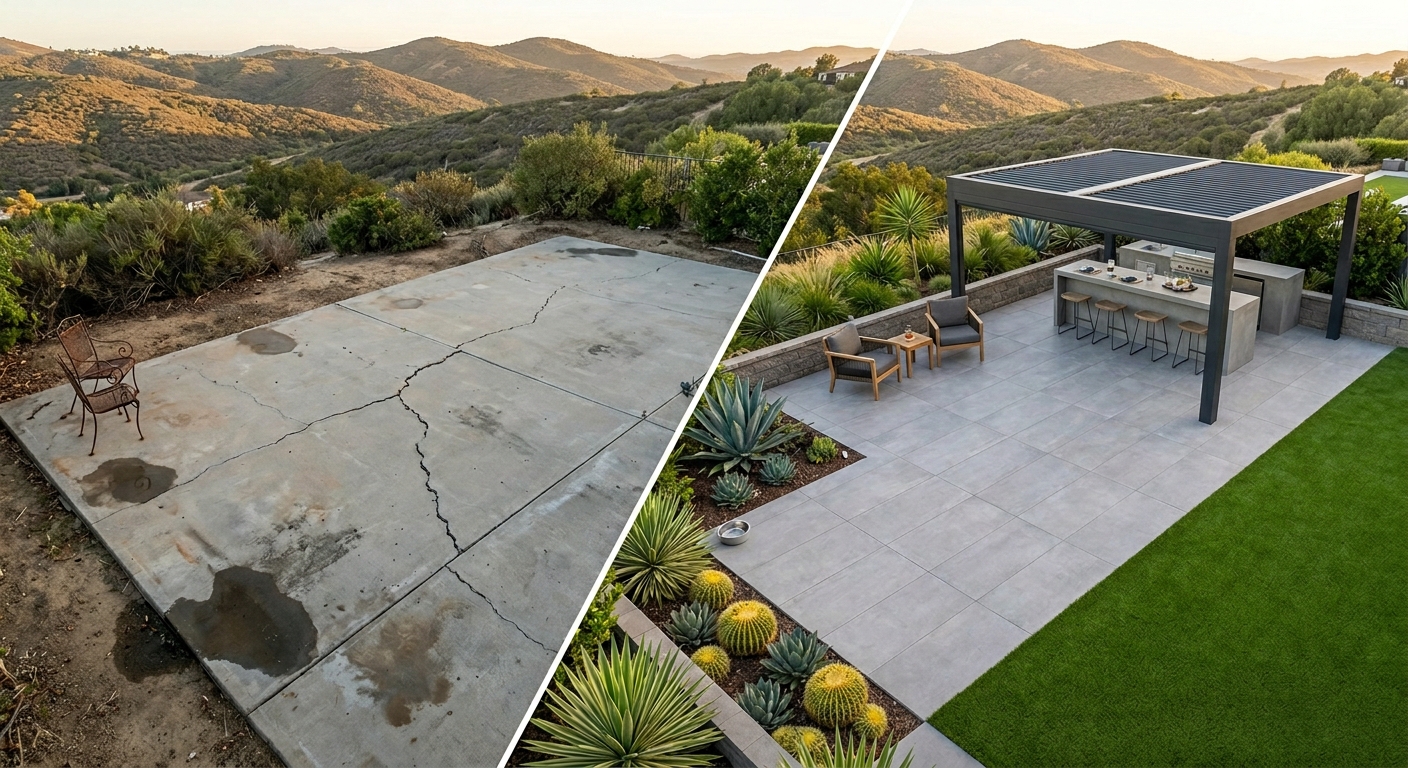
A poured concrete slab is rigid. It cannot flex. When the ground beneath it moves (and in San Diego, it will move), the concrete has two options: hold together or crack. Concrete always cracks eventually. That is not an opinion. It is a material science fact. Contractors cut control joints into concrete specifically to dictate where the cracking occurs, but cracks also form outside those joints, especially on larger surfaces like driveways and patios.
Interlocking pavers are a fundamentally different engineering system. Instead of one rigid slab, you have hundreds of individual high-density concrete units locked together over a deep, compacted aggregate base. The entire surface can flex imperceptibly with soil movement. Each paver transfers load to its neighbors through the interlock, distributing stress across the system instead of concentrating it at a single failure point.
This is not a cosmetic preference. It is a structural engineering difference. For a deeper look at San Diego’s soil conditions and hardscape engineering requirements, read our San Diego Hardscape Engineering Guide.
The Repair Scenario That Changes Everything
Here is the situation no concrete contractor will bring up during the sales pitch.
You have a main water line, a gas line, or an electrical conduit running beneath your patio or driveway. Five years from now, that line develops a leak. The repair crew needs to access the pipe.
If you have a concrete slab: A crew arrives with a concrete saw and jackhammer. They cut a trench through your patio or driveway, fix the pipe, then pour new concrete into the trench. The new pour will never match the color, texture, or weathering of the original surface. You now have a permanent scar running through your hardscape. Typical cost for the concrete demolition and repour alone (not counting the plumbing repair): $2,000 to $6,000 depending on the length of the trench and thickness of the slab.
If you have pavers: Your contractor (or even a handy homeowner) lifts the pavers along the repair path, stacks them to the side, and exposes the base material. The plumber fixes the pipe. The base gets re-compacted, bedding sand gets re-screeded, and the exact same pavers go back into place. Total cost for the hardscape disruption: effectively zero. No new materials. No color mismatch. No visible evidence a repair ever happened.
This single scenario is why many San Diego estate homeowners choose pavers even when they prefer the aesthetic of concrete. The long-term repairability makes pavers a fundamentally lower-risk investment.
The 10-Year Total Cost of Ownership
The initial bid is only chapter one. Here is the full financial picture for a 1,000 square foot San Diego patio over a decade.
Poured Concrete: 10-Year Cost
Initial install (colored concrete): $15,000
Resealing every 2 to 3 years (3 rounds): $2,400 to $4,500
One crack / utility trench repair (year 5 to 7): $2,500 to $6,000
10-Year Real Cost: $19,900 to $25,500
Condition at year 10: Faded color, visible patches, control joint wear
Interlocking Pavers: 10-Year Cost
Initial install (premium pavers): $25,000
Resealing (optional, cosmetic only): $0 to $2,000
Utility repairs (zero material cost): $0
Polymeric sand refresh (year 5 to 7): $300 to $800
10-Year Real Cost: $25,300 to $27,800
Condition at year 10: Identical to installation day
The gap between concrete and pavers is $1,400 to $6,300 over ten years. On a $15,000+ project, that difference is between 5% and 15%. And at year 10, the paver surface still looks new while the concrete surface looks tired.
When Concrete Actually Wins
We install pavers. That is our business. But we are not going to pretend concrete is never the right answer. Here is when poured concrete makes sense:
Narrow side yards and utility runs. If you need a simple 3-foot-wide walkway along the side of your house that nobody sees, broom-finish concrete at $8 to $12 per square foot is a perfectly rational choice. The crack risk on a narrow pour is lower, and the cost savings are significant.
Retaining wall footings and structural foundations. Pavers are a surface system, not a structural foundation. Retaining walls, seat walls, and outdoor kitchen islands all require poured concrete footings beneath them. This is not an either/or situation. Most high-end San Diego hardscape projects use both: concrete for the structural foundation and pavers for the finished surface.
Aggressive slopes where vehicular pavers are not feasible. Some steep San Diego driveways (common in hillside neighborhoods like Mt. Helix, La Mesa hills, and parts of Point Loma) may require a monolithic concrete pour with integral color for traction and structural continuity. Your engineer will make this call based on the grade.
Being honest about when concrete is appropriate builds more trust than pretending pavers are universally superior. The right material depends on the application.
What a Proper Paver Installation Requires in San Diego
The reason paver installations cost more than concrete is not the material. It is the sub-base engineering. A properly installed paver system in San Diego requires:
Excavation and grading to the correct depth for the application: 7.5 inches for pedestrian areas (patios, walkways) or 9.5 inches for vehicular areas (driveways, motor courts). RV-rated surfaces require 11.5 inches of excavation. Proper slope for drainage away from your home’s foundation is established during this step.
Compacted Class II base rock installed in controlled lifts and compacted to 95% density using a vibratory plate compactor. Pedestrian areas get 4 inches of base. Vehicular areas get 6 inches of base compacted in 2-inch lifts, which is critical for achieving uniform density throughout the full depth. This base is the actual structural layer. The pavers are the wearing surface. If a contractor skimps on base depth or compaction, the pavers will settle and rut within the first year.
Bedding sand screeded to a uniform 1-inch depth using screed rails.
Edge restraints spiked into the base to prevent lateral creep at all exposed edges.
Polymeric sand swept into the joints and activated with water to lock the pavers together and resist weed growth and insect intrusion.
If a contractor’s bid seems too good to be true, it is almost always because they are cutting corners on the base. A shallow base installed on San Diego’s clay soil will fail. This is not a matter of opinion. It is engineering.
Before signing any hardscape contract, demand proof of active CSLB licenses (C-27, D-06 & D-12) and $2M general liability insurance. Run every contractor through our Contractor Vetting Playbook to verify their licensing, insurance, and engineering standards.
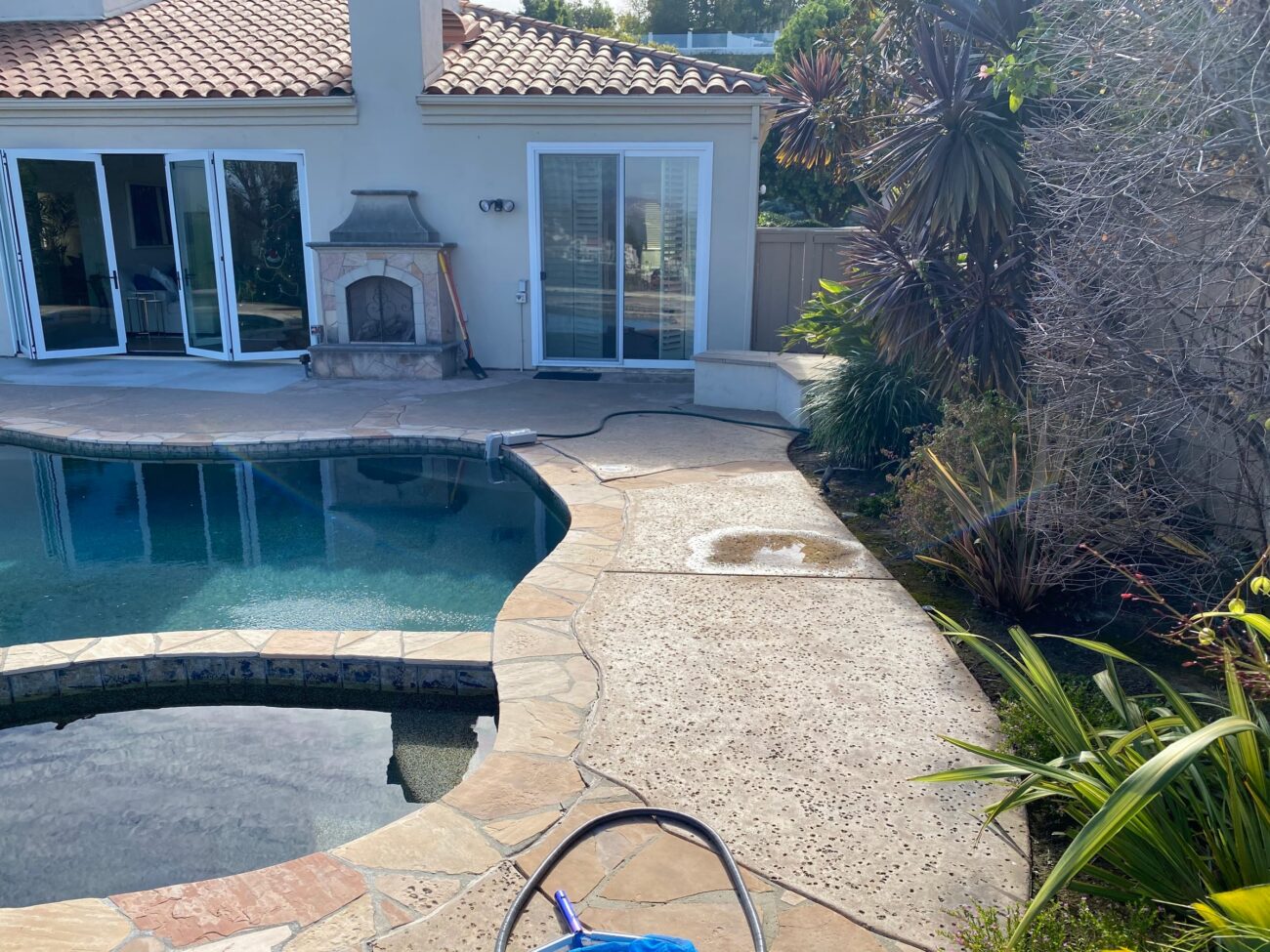
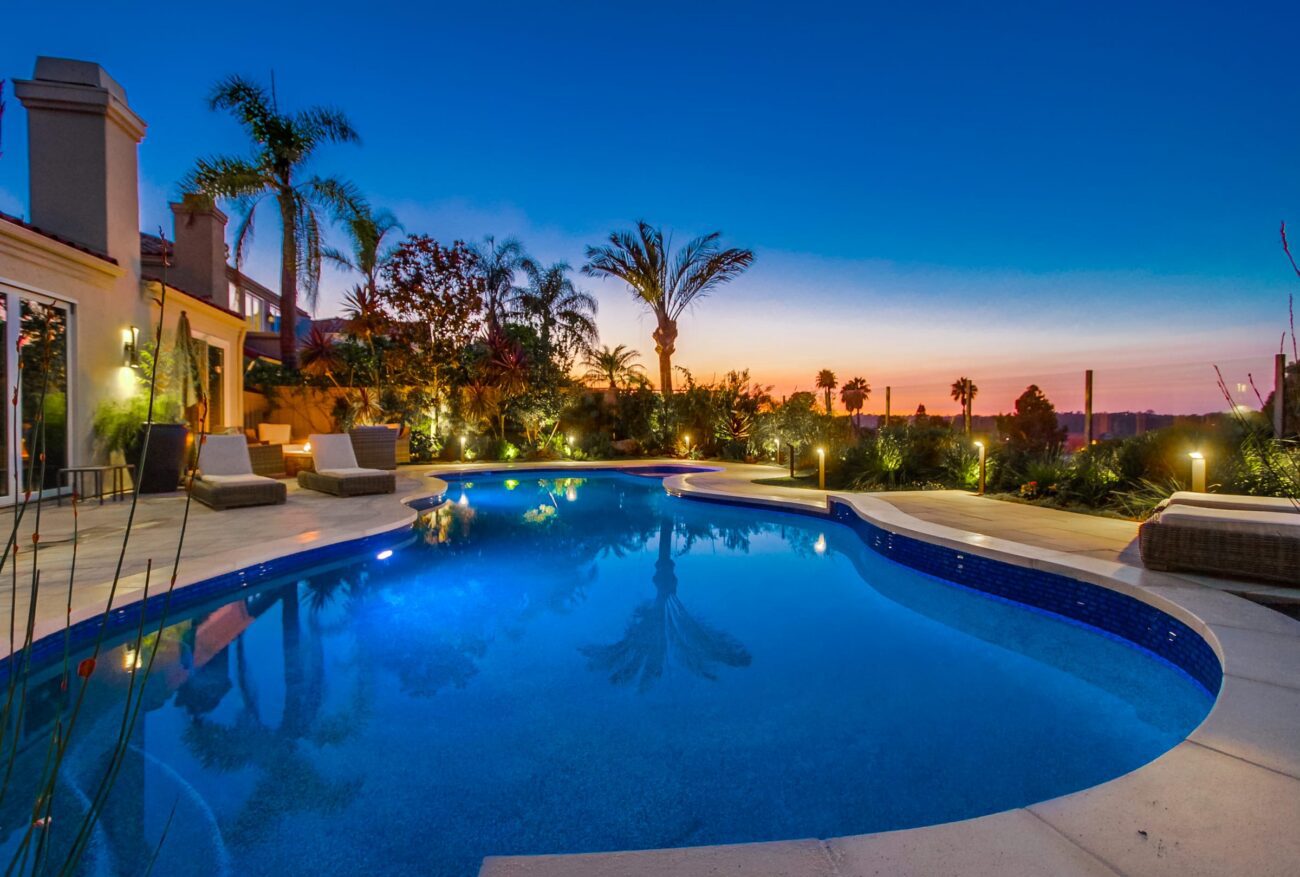
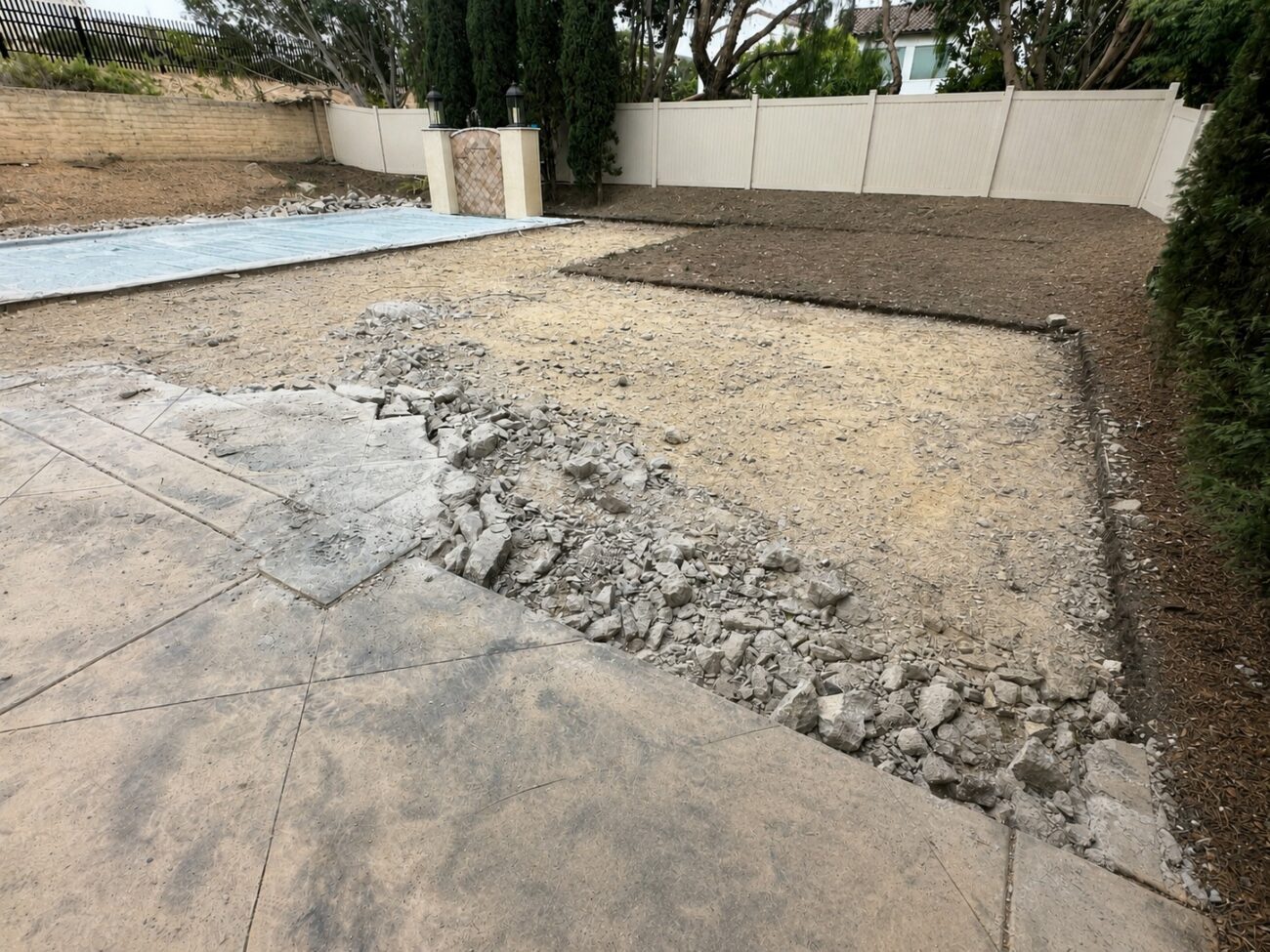
Real San Diego projects, real investment
Estimates are a starting point. Here is what that budget actually builds — same crews, same designers you would work with.
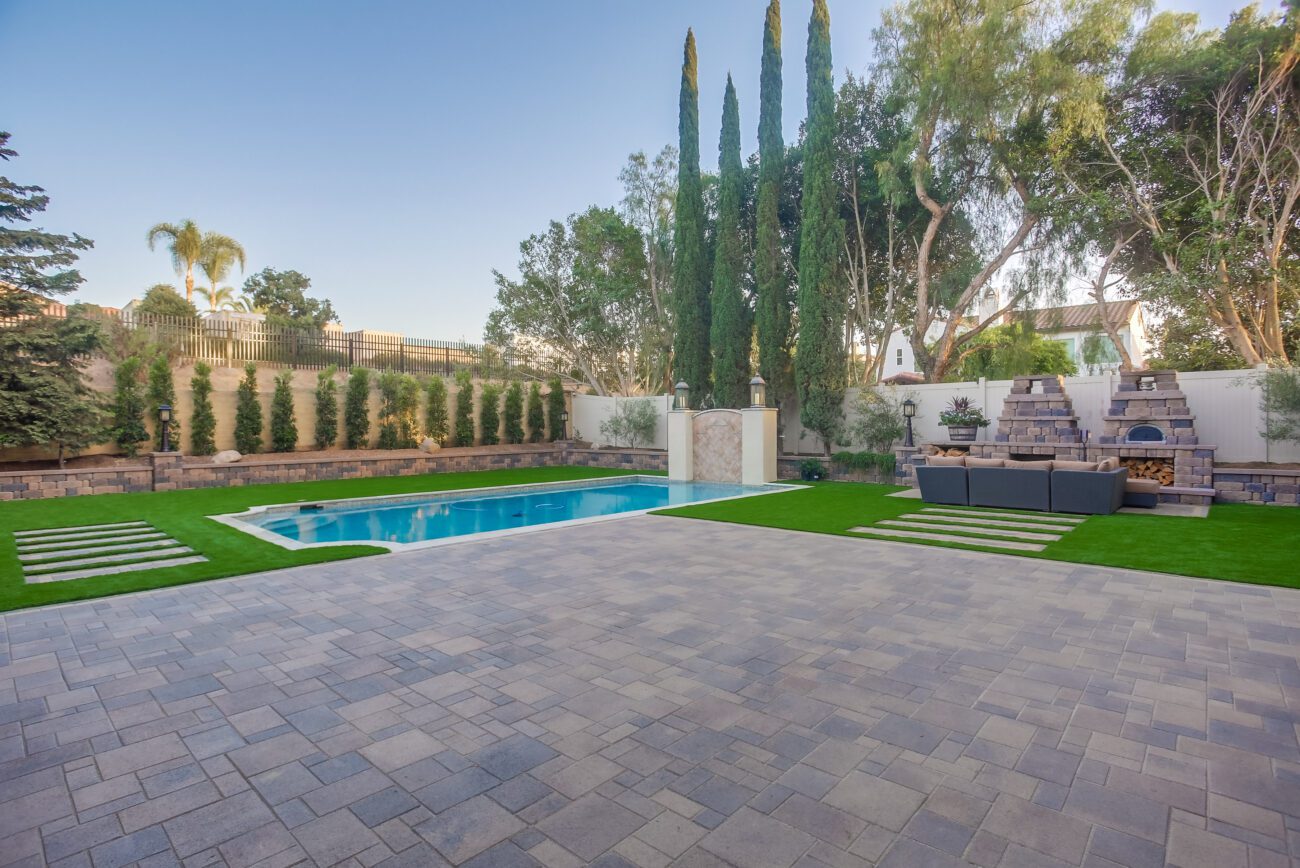
Free, no-obligation design consultation with a San Diego designer.
How This Connects to Your Full Project
Most San Diego homeowners are not just installing a patio or driveway in isolation. A hardscape surface is usually part of a larger outdoor living project that might include an outdoor kitchen, fire feature, pergola, landscape lighting, or retaining walls. When planning a comprehensive project, there are cost efficiencies to bundling everything under one design-build contract rather than hiring separate contractors for each element.
For a complete breakdown of what full outdoor living projects cost in San Diego, read our 2026 Outdoor Living Cost Guide. If you already know you want pavers, you can get a quick estimate using our Paver Cost Calculator.
The INSTALL-IT-DIRECT Standard
Every paver project we build is backed by our written On-Time Completion Guarantee. We agree on a timeline before construction starts. If we miss the deadline due to delays on our end, we pay you a daily schedule credit. No other landscaping company in San Diego offers this. See our guarantee details.
We carry full workers’ compensation and general liability insurance that exceeds industry standards, meaning zero liability exposure for you as the homeowner. We are fully licensed with the California CSLB (License #947643, C-27, D-06 & D-12 classifications), and we have completed over 6,000 projects across San Diego County since 2009.
Ready to Compare Your Options?
Schedule a free consultation and we will walk your property, discuss your goals, and provide a detailed estimate for both concrete and paver options so you can make the right decision for your home.
Schedule Your Free Consultation |
Use the Paver Cost Calculator |
Frequently Asked Questions
We design and build paver patios, driveways, pool decks, and walkways across San Diego County, including Rancho Santa Fe, Del Mar, La Jolla, Carmel Valley, Encinitas, Carlsbad, Poway, Escondido, El Cajon, Santee, Scripps Ranch, Oceanside, San Marcos, Chula Vista, Coronado, and the surrounding coastal and inland communities.